Feel like you're treading water? Maybe you don't need to start kicking just yet.
I must have been three, perhaps four. Brighton Beach in Otago, a sun-bleached bay between craggy outcrops on the South Island of New Zealand, where the ice-cream drips between your fingers, but the southerly breeze carries an antarctic bite.

My hands were clasped around my aunt's fingers. A wave came in. Not a big one, by any reasonable measure, but big enough to knock a small person off her feet and put her head under.
I remember the gasping cold, and the shock of not being able to breathe. But even more terrifying was the sudden jolt of disorientation.
Which way was up? Seconds ago, this water was tickling my ankles, and now my feet and hands were desperately pawing for solid ground. The salt water burnt my nostrils, and my body was somersaulting in a cloud of churned-up sand. To this day, I panic in water if I can't find solid ground and know my head will be safely above the surface.
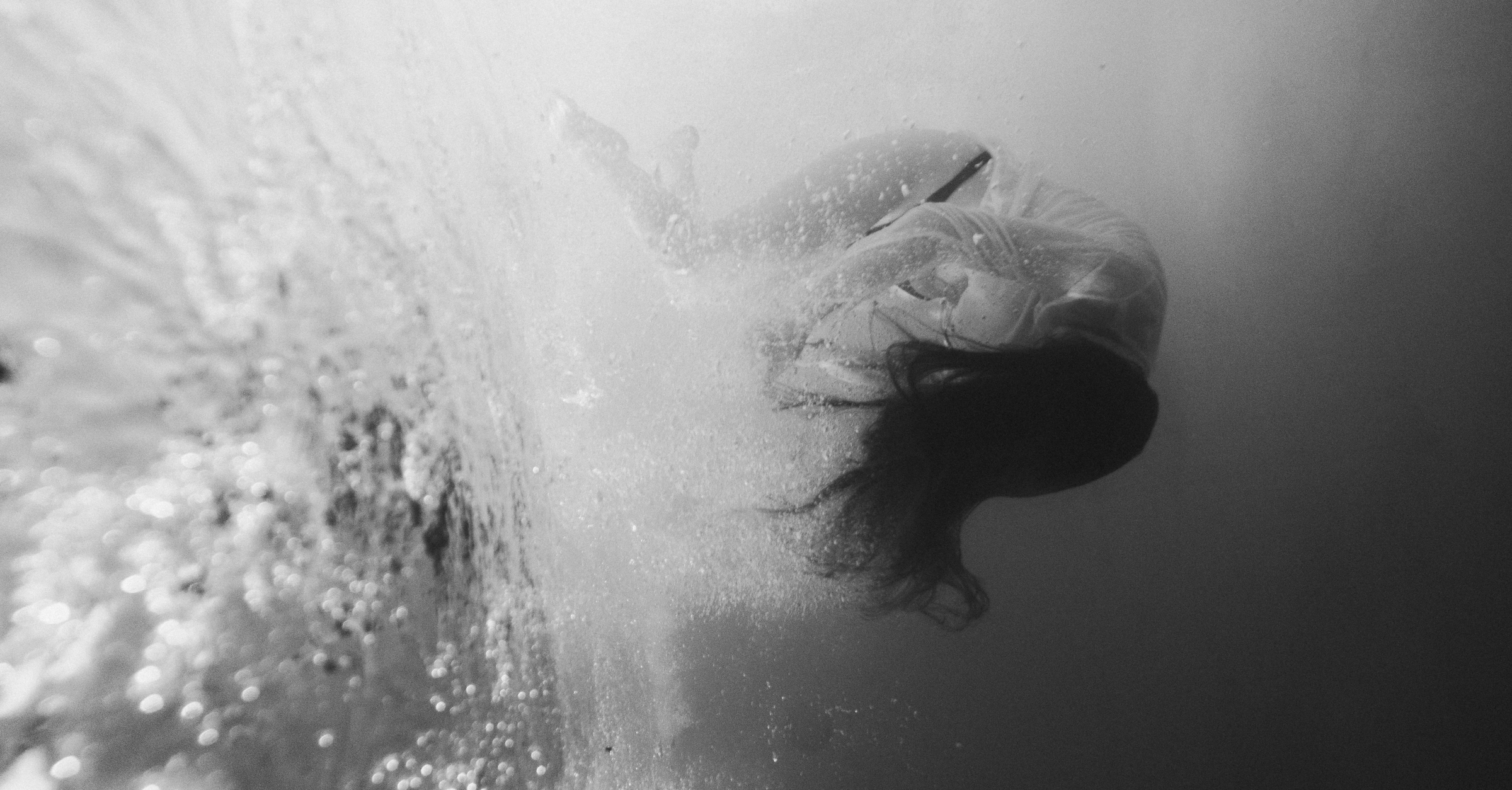
I have been thinking about this lately because as a career-changer, I find myself once again foundering in water so deep I can't feel the bottom, with the horizon wavering unsteadily. But this time, I’m surprised at how liberating it is. In fact, if I look back, the only way I have ever managed to learn anything new, anything genuinely outside my comfort zone, has been to throw myself into water that's well over my head, and trust that I will work out, eventually, which way is up.
I’m not sure this view offers anything new to arts workers. We are in a constant state of discomfort, always learning, with every performance an ocean of possibility and impossibility, dis- and re-orientation.
But many of us are conditioned to use the horizon in a very specific way. The expectation, more or less, goes like this: you will accumulate technique in a structured way, you will progress through the grades, you will sit auditions, win competitions, and be rewarded with a tenured job or a flourishing freelance career. Your improvement will be continuous, linear. The recognition will be steady and warranted. The artistic hunger that drove you to do all this in the first place will remain satisfyingly unsatisfied. You will keep swimming, marking the milestones along the way.

Yet a great many of us end up treading water for years at a time, and some of us lose our artistic hunger and start heading for shore. Neither of those things are negative, necessarily. There's a beauty in letting the water carry you where it will, without fight or flight.
But most of us do want to persevere, and often we get caught up in being far too specific about exactly how illustrious the next goalpost is meant to be, exhausting ourselves kicking towards a specific buoy. I know any number of young conductors carrying a little black book in their back pocket of the orchestras and opera companies they intend to work with, the agent they want to snag, the order in which it must happen. I was one of them. So why is that a problem? It is motivating - at least to a point. The problem is, the goal has stopped being a goal at all. It has become a task.

To understand the difference, I'm going to dip you into the brain of my software manager.
---
We were discussing the requirements of a work log, and accountability in the workplace. How does one orientate one's professional development? How can we measure our success quantitatvely? I've long been an obsessive goal-setter, so I showed him my list of planned achievements. He considered it for a few seconds, and then articulated a distinction I'd never considered.
A task is done. It has a tick-box. You either did the thing or you didn't.

A goal should be something fundamentally different. A goal is a signpost, a way-marker. It points your feet in the right direction. If you follow the compass in that direction, wherever you end up is always going to be interesting and rewarding.
Perhaps this is an unfashionable thing to say in the productivity-industrial-complex era, and it took me longer than I'd like to admit to absorb it. We are bombarded with messages of maximising our careers, our parenting, our homes, our protein intake... I'm certainly a sucker for it - high status achievement was a primary motivator in my childhood, and goals have always been meaningful to me insofar as if I do not achieve them, I've failed. I measure my success by them. I qualify myself by them.

But where a task wants completion, a goal wants direction. Direction, it turns out, is what you actually need when you can't tell which way is up. You don't need a task, or a goalpost – your feet don’t even need to touch the ground.
You need a horizon.
---
The most useful conversation I've had on any of this recently was with my mother-in-law, who spent a long career as an psychologist of education. We were talking about the word "potential".
The notion that one reaches one's potential, she pointed out, is mistaken. It depends on the assumption that potential is a fixed point, a finishing line one is either on track to cross or not. Whereas, in fact, every time you arrive at one of its supposed way-points, the horizon visibly broadens.
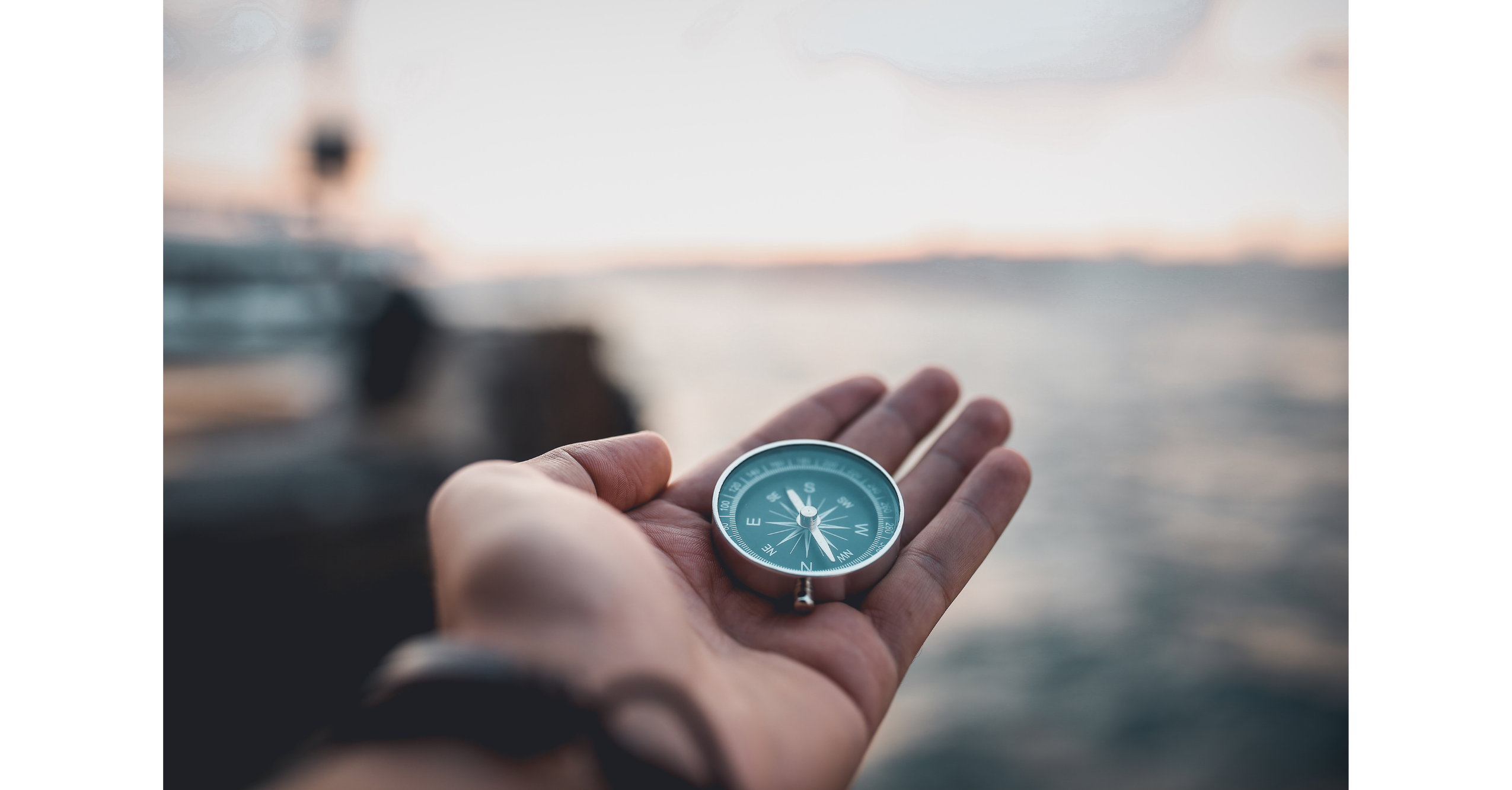
The next set of possibilities only becomes legible precisely because you have made it this far. There is no finishing line. There is just a continuously redefined horizon, redrawn in higher resolution each time you reach what you thought was the edge.
Classical musicians can hardly be accused of not stretching. We stretch compulsively. There is always more repertoire to learn, deeper insight to gain, more music to listen to.
Rather, the trouble is that the external scaffolding of a music career is built around a series of fixed validation points — the audition won, the agent secured, the tenured chair, the residency, the call from the manager. We are quietly taught, from young, to yearn for the moment that announces "you've made it".
But that moment doesn't really exist. Or, on the rare occasions it does, it is fleeting. We are, as the saying goes, only as good as our last performance. And the disorientation, when the expected goalpost fails to materialise according to the timetable our teachers more or less promised, can leave us as bewildered as I felt inside that wave at Brighton Beach.

For those of us who eventually consider a sideways step (augmentation, a parallel income stream, a full career change), the disorientation deepens and widens. A conservatoire training, focused understandably on the artistry, does almost nothing to prepare us for anything outside the artist we are training to become. And when the day comes that we want, or need, to step sideways, the lack of any handhold in the new field, combined with losing the solid ground of the old one, is enough to make most of us turn around, cold and damp, and doggy paddle back to the shore.
Yet plenty of us find ways through it, let ourselves muddle around treading water for a while, take a breath and start kicking when we're ready. It’s a matter of trusting that while the horizon keeps moving, so can we. The solid ground we’re on can be a springboard, and the buoy just outside arm's reach doesn't need to be a destination. It can just be the next way-marker: a conversation with someone a few steps ahead of you, a podcast you understand about a third of, a meeting you stumbled out of with ten new words to look up.
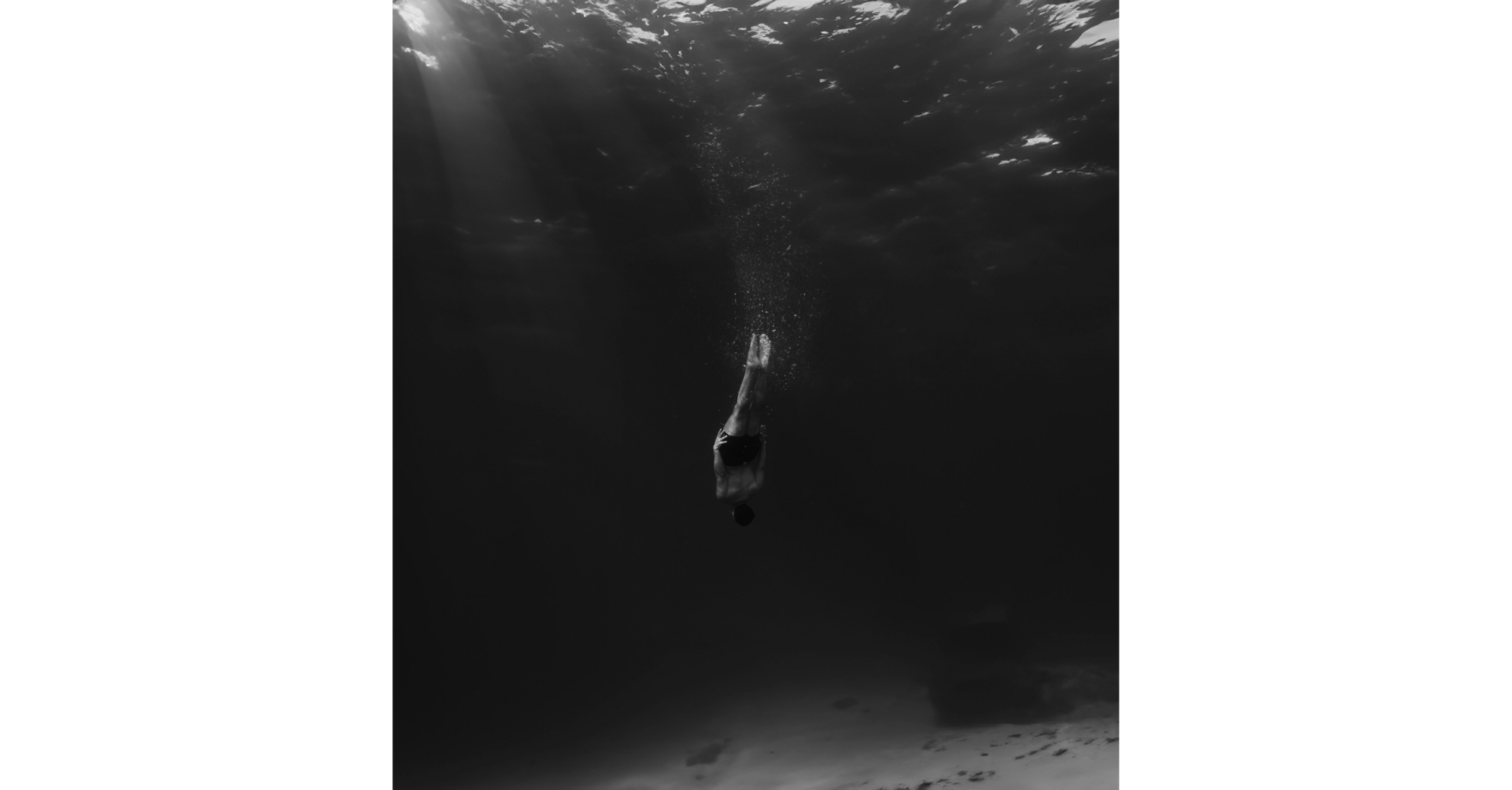
Fluency in any new water, metaphorical or otherwise, is largely a matter of acclimating to its temperature, currents, and ecosystem. None of that can be acquired from the safety of dry land. You just have to dive in and let yourself drown upwards.
Enjoyed the blog? Subscribe to our newsletter to receive it delivered straight to your inbox
